
Maze Madness - Brain Puzzle
Ashita GamesPuzzle
4.91.37K Reviews
- Version
- 1.17.1
- Installs
- 5.00M
- Age Rating
- Everyone
Screenshots
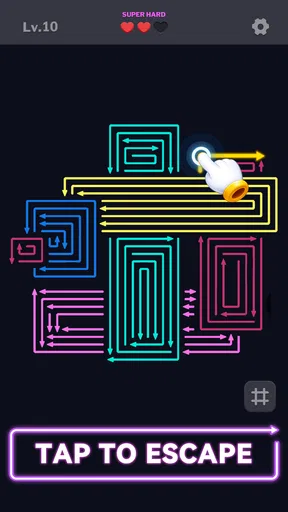
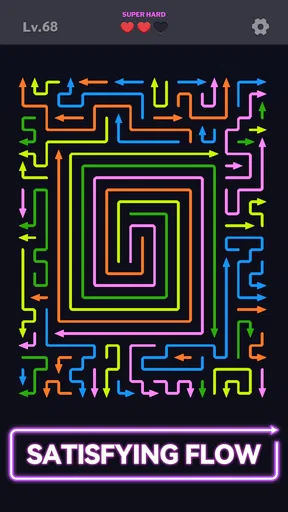
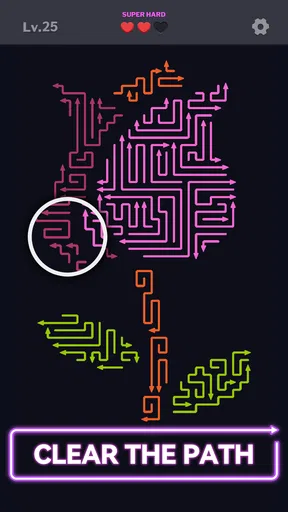
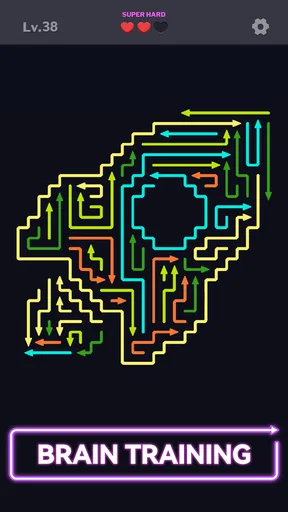
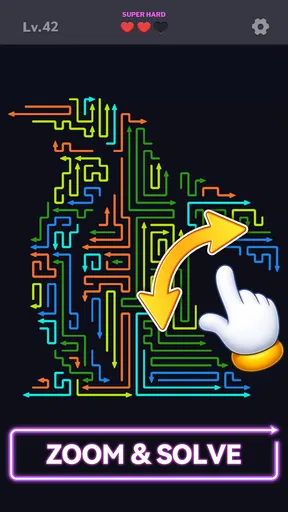
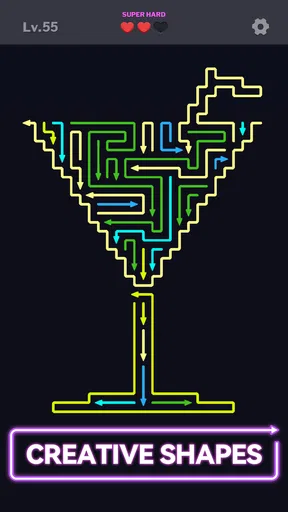
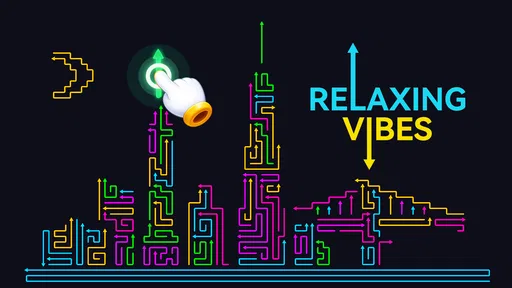
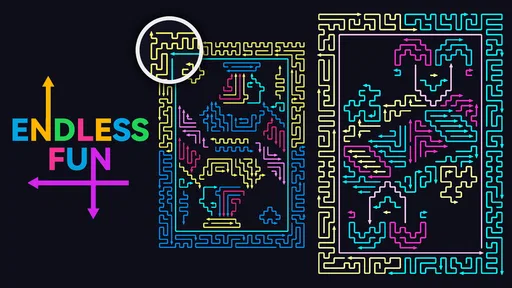
Our Review of Maze Madness - Brain Puzzle
 Analysis by Appyee
I went into Maze Madness - Brain Puzzle expecting a quick arrow-clearing game and found something more focused than its compact presentation suggests. It is a free puzzle game from Ashita Games, built around colorful maze layouts and a simple tap-to-clear interaction. The idea is easy to understand almost immediately: read the direction of the arrows, remove them in a safe order, and open the path without creating a blockage.
That simplicity is the reason it works well for short sessions. I can play a few stages while waiting for something, but the better puzzles ask for enough planning that I stop treating them as background entertainment. The game has a 4.9 average from around 164 thousand ratings, with more than 5 million installs, so it has clearly found an audience beyond people who only try one puzzle and leave. My experience explains why: it offers a clean mental challenge without requiring a long tutorial or a complicated rulebook.
A colorful first impression that gets to the puzzle quickly
The opening experience is refreshingly direct. There is no need to learn a large collection of buttons or understand a story before playing. The visual language points toward the central task: colorful maze pieces, directional arrows, and a board that gradually becomes a problem to untangle. That clarity matters in a puzzle game because every decorative element has the potential to compete with the information the player needs.
Here, the colors help me separate pieces and read the board at a glance. They also give the game a lighter personality than a stark grid-based brain teaser. The setting is not built around characters or a narrative world; instead, the maze itself becomes the place I explore. Each arrangement suggests a small spatial situation, and the changing shape of that situation supplies the sense of progress.
I especially like that the presentation does not pretend the game is something more elaborate than it is. It is not an adventure with a puzzle system attached. It is a focused maze puzzle whose art direction supports recognition, order, and movement. That restraint makes the first few minutes comfortable for younger players and for anyone who wants to start solving without reading instructions for several minutes.
The trade-off is that players looking for a strong narrative setting may find the experience emotionally quiet. There is no character journey carrying me from one stage to another, so the satisfaction comes from solving the board rather than discovering a fictional world. That is perfectly suitable for a casual brain game, but it is worth knowing before installing it if atmosphere for you means story, character development, or dramatic locations.
Why the visual language matters during harder boards
The most useful artistic choice is the separation between the board and the directional information. In a game where one mistaken tap can change the available space, I need to distinguish an arrow's orientation quickly. Bright, readable pieces make that possible without forcing me to zoom in mentally on every part of the maze.
My practical advice is to stop looking at the board as one picture. I get better results when I divide it into groups: pieces with an immediately open route, pieces blocked by neighboring shapes, and pieces whose removal would alter the center of the maze. This way of reading the colors and paths turns the attractive presentation into a solving aid rather than mere decoration.
Another useful habit is to identify the edges before touching the middle. Outer pieces often reveal the direction in which space can open, while central pieces may depend on several earlier moves. I do not treat every visible arrow as equally urgent. The board becomes much easier when I ask which move creates room for two or three later moves instead of choosing the most obvious arrow simply because it is visible.
This is one of the game's less obvious strengths: the colorful design encourages fast recognition, but the best play still rewards slowing down. The art invites a quick response; the puzzle quietly asks for restraint. That tension gives the small boards more character than a basic tap-and-clear routine would have on its own.
Sound, rhythm, and the feel of each short session
The pacing is shaped more by interaction than by a large audiovisual spectacle. I tap, watch the board respond, reassess the remaining paths, and continue. That loop gives the game a gentle rhythm. A successful move feels like a small release of pressure, while a poor sequence makes the remaining layout harder to read. The experience is therefore closer to arranging a visual problem than rushing through an action challenge.
I find that rhythm useful in everyday situations. If I have only a few minutes, I can begin a board without committing to a long campaign. If I have more time, I can continue because each new arrangement resets the mental question. This makes it a good companion for a commute, a short break, or the moment when I want something more engaging than scrolling but less demanding than a full game.
The sound design, where it supports the interaction, works best when treated as confirmation rather than as the main attraction. Puzzle games benefit from clear feedback: I want to know that a tap registered and that the board changed as intended. The overall mood stays light and controlled, which matches the colorful presentation. It does not turn every move into a dramatic event, and that is appropriate for a game built around concentration.
There is also a benefit to the restrained mood when I play repeatedly. A loud, urgent presentation could make the arrow logic feel more stressful than it needs to be. Maze Madness keeps the emotional temperature closer to calm focus. That makes it suitable for players who enjoy visual problem-solving but do not want timers, combat pressure, or a constant stream of interruptions from the game itself.
At the same time, this calm pacing will not satisfy everyone. If you want a puzzle game to create tension through countdowns, escalating music, or a strong sense of danger, this is likely too gentle. Its appeal depends on enjoying the small cycle of observation and correction. The game asks me to care about the order of actions, not to react quickly under pressure.
A practical rhythm for playing without getting stuck
When a board begins to feel confusing, I do not keep tapping randomly. I pause and trace each arrow mentally toward its exit. Then I look for a move that removes an obstruction while preserving options for the pieces around it. This is more effective than trying to solve the whole maze at once, and it keeps the pace steady instead of turning one difficult layout into a frustrating guessing exercise.
I also recommend using a two-pass approach. On the first pass, I inspect the entire board and mark the obvious moves in my head. On the second, I choose the move that changes the largest useful area, not necessarily the one closest to an edge. This distinction matters because a visually easy move can sometimes leave a compact cluster untouched, while a less obvious removal can make the next sequence much clearer.
For a child or a new player, I would explain the game using the idea of making room rather than memorizing a solution. That keeps the focus on spatial reasoning. For an experienced puzzle player, I would suggest treating each stage as a dependency problem: which piece must move first, which pieces are waiting behind it, and which move could close off a route? The same colorful board supports both simple and more analytical play.
Where the mechanics fit, and where they may not
The central mechanic is approachable because tapping an arrow feels natural. The challenge comes from deciding whether that arrow can actually move safely and whether removing it will help or hurt the remaining layout. This gives the game a useful balance: the controls are simple enough for an Everyone-rated audience, but the order of actions can still demand attention.
That combination makes it a good choice for casual players who want a brain-training flavor without studying complex rules. It is also a reasonable pick for families because the board communicates its goal visually. Younger players may need help understanding why an apparently available piece is not the best first choice, but the underlying question—what can move, and what will that reveal?—is easy to discuss.
The game is less suitable for someone seeking word puzzles, number puzzles, or deep logic systems with many different rule types. Its identity stays closely tied to directional maze clearing. If you prefer Sudoku-style deduction, nonogram picture logic, or a narrative puzzle adventure, those alternatives will probably offer more variety in the kind of thinking they demand.
Compared with a traditional maze game, this is not mainly about steering a character from a starting point to a destination. I am manipulating the maze itself by clearing pieces in a useful sequence. Compared with a match-style puzzle, it does not depend on making groups or chasing a chain reaction. The pleasure comes from spatial order and foresight rather than color matching, even though the colorful presentation might initially suggest a more reflexive game.
That distinction is important when deciding whether it belongs on your phone. If you want to relax with a puzzle that still makes you plan, it fits. If you want constant novelty from boosters, characters, or several unrelated modes, it may feel narrow. Its focused design is both its strongest quality and its clearest limitation.
The free entry point is a major advantage for trying it casually. The game is listed as free, while in-app purchases are priced at $9.99 per item. I would approach those purchases carefully and first decide whether the basic loop remains enjoyable over several sessions. A puzzle should feel satisfying because I understand the board, not because I feel pushed toward spending when a solution takes longer than expected.
Device compatibility is also straightforward for many Android users: the listed minimum is Android 9, and the current version is 1.17.1. That gives prospective players a useful check before downloading. Since the game is designed around taps and visual reading rather than complex controls, a larger screen may make dense layouts easier to inspect, while a smaller phone keeps the experience especially convenient for quick breaks.
Who will get the most from it
I would recommend it to someone who enjoys compact puzzles with a clear visual goal, especially if they like planning several moves ahead without dealing with a long tutorial. It is a good fit for a commuter who wants a short mental reset, a parent looking for an approachable game rated for Everyone, or a puzzle fan who appreciates a consistent mechanic refined through different maze arrangements.
It also works for people who want to improve their habit of scanning a problem before acting. The game rewards noticing blocked routes, preserving open space, and recognizing dependencies. Those are modest skills, but they make the difference between clearing a board smoothly and tapping into a dead end. I would not call it a formal training tool, yet it naturally encourages deliberate visual reasoning.
I would skip it if your priority is an expansive world, a strong soundtrack, or a competitive system that constantly measures performance. The setting is abstract, the mood is controlled, and the main reward is the solution itself. Players who need a story to motivate every stage may run out of reasons to continue sooner than players who enjoy the puzzle process for its own sake.
One realistic scenario shows the game at its best. Imagine having ten minutes before an appointment. A social feed may leave you feeling scattered, while a large strategy game asks for more attention than you have. Here, I can open a board, inspect the exits, solve a compact sequence, and stop without losing the thread of a larger story. Even if I do not finish immediately, the unfinished layout remains a contained problem rather than an obligation.
How the art and mechanics settle into one mood
The strongest overall quality is coherence. The colorful maze design makes the board inviting, the directional arrows keep the objective readable, and the measured rhythm gives me time to think. None of these parts overwhelms the others. The presentation does not distract from the puzzle, while the puzzle gives the visual style a practical purpose.
That coherence also explains why the game feels more polished in use than its basic premise might suggest. “Tap the arrows” sounds almost too simple, but the surrounding choices turn it into a repeatable mental routine. I am not merely removing objects; I am deciding how to preserve access, open space, and keep the board legible after every action.
My main reservation is longevity for players who require broad mechanical variety. A focused puzzle can remain enjoyable for a long time when its layouts continue to challenge different habits, but the core interaction does not change into a collection of unrelated activities. I would view that as a deliberate design choice rather than a flaw, provided you install it for the maze-clearing experience itself.
The developer, Ashita Games, has positioned the game as an accessible puzzle rather than a demanding specialist title. Its release date is February 12, 2026, and the strong user response suggests that the straightforward format connects with a large casual audience. I would still judge it by your preferred kind of challenge, not by popularity alone: a high average rating can show broad appeal, but it cannot guarantee that a narrow puzzle loop matches your taste.
For me, the final verdict is positive. Maze Madness - Brain Puzzle is at its best when I want a calm, colorful exercise in sequencing and spatial awareness. It gives each tap a consequence, uses its art to improve readability, and maintains a pace that suits short sessions. I recommend it to players who enjoy solving one contained visual problem at a time, while warning story-driven and variety-hungry players that its focused design may feel limited.
If that sounds like your kind of break, the free download makes it easy to test the first impression for yourself. Give the board a moment before tapping, look for the move that creates room rather than the move that merely looks available, and let the quiet rhythm do its work. That is where this particular puzzle game becomes most enjoyable: not in speed, but in the small satisfaction of seeing a tangled maze gradually make sense.
Verdict
Strengths of Maze Madness - Brain Puzzle
- Simple controls make it easy to start playing immediately.
- Short levels are convenient for quick gaming sessions.
- Maze layouts help develop spatial awareness and planning skills.
- Works well for players who enjoy calm, goal-focused challenges.
- Suitable for a wide range of ages and experience levels.
Limitations of Maze Madness - Brain Puzzle
- Later puzzles may feel repetitive once the core mechanics are familiar.
- Some players may find the difficulty progression uneven.
- Small maze paths can be harder to follow on compact screens.
- Limited variety may reduce long-term appeal for frequent players.
- Progress can feel slow for users who prefer fast-paced gameplay.
Similar Picks in This Category
View All
Block Blast!
HungryStudio4.8

Braindom: Brain Games Test
Lahana Game Studio4.6

AMAZE!
CrazyLabs LTD4.6

Sudoku - Classic Sudoku Puzzle
Oakever Games4.7

Art Puzzle - Puzzle Games
Easybrain4.8

Amaze GO!
Oakever Games4.9
Frequently Asked Questions
What is Maze Madness - Brain Puzzle?
Maze Madness - Brain Puzzle is a casual puzzle game focused on guiding a character or object through maze-like levels. Its main challenge is finding the correct route while avoiding dead ends and completing each stage efficiently. The game is designed for short play sessions, making it suitable for users who enjoy logic challenges, pathfinding, and progressively more demanding puzzles.
How do you play Maze Madness - Brain Puzzle?
Gameplay is generally based on navigating through each maze by swiping, tapping, or dragging, depending on the device and level design. You need to study the available paths, plan your movement, and reach the destination without getting trapped. Later stages may require faster decisions, better route planning, or solving additional obstacles before the maze can be completed.
Is Maze Madness - Brain Puzzle suitable for children?
Maze Madness - Brain Puzzle can be suitable for children who enjoy simple logic games, since the core concept is easy to understand and does not require complicated controls. However, parents should review the app’s age rating, advertising policy, and any in-app purchase options before allowing younger children to play. Difficulty may also vary considerably between levels.
Does Maze Madness - Brain Puzzle work offline?
Many maze puzzle games can be played without a constant internet connection, especially after the application has been installed and its required content is available. Nevertheless, features such as advertisements, analytics, updates, leaderboards, or optional rewards may require internet access. It is best to test the game in airplane mode, because offline availability can depend on the current version.
Is Maze Madness - Brain Puzzle free to download?
Maze Madness - Brain Puzzle may be available as a free download, but the exact model can include advertisements, optional purchases, or other monetization features. Before installing, check the official Google Play Store or Apple App Store listing for the latest details about pricing, permissions, subscriptions, and supported devices. Always download from an official store to receive legitimate updates and safer files.
Play our best games!


